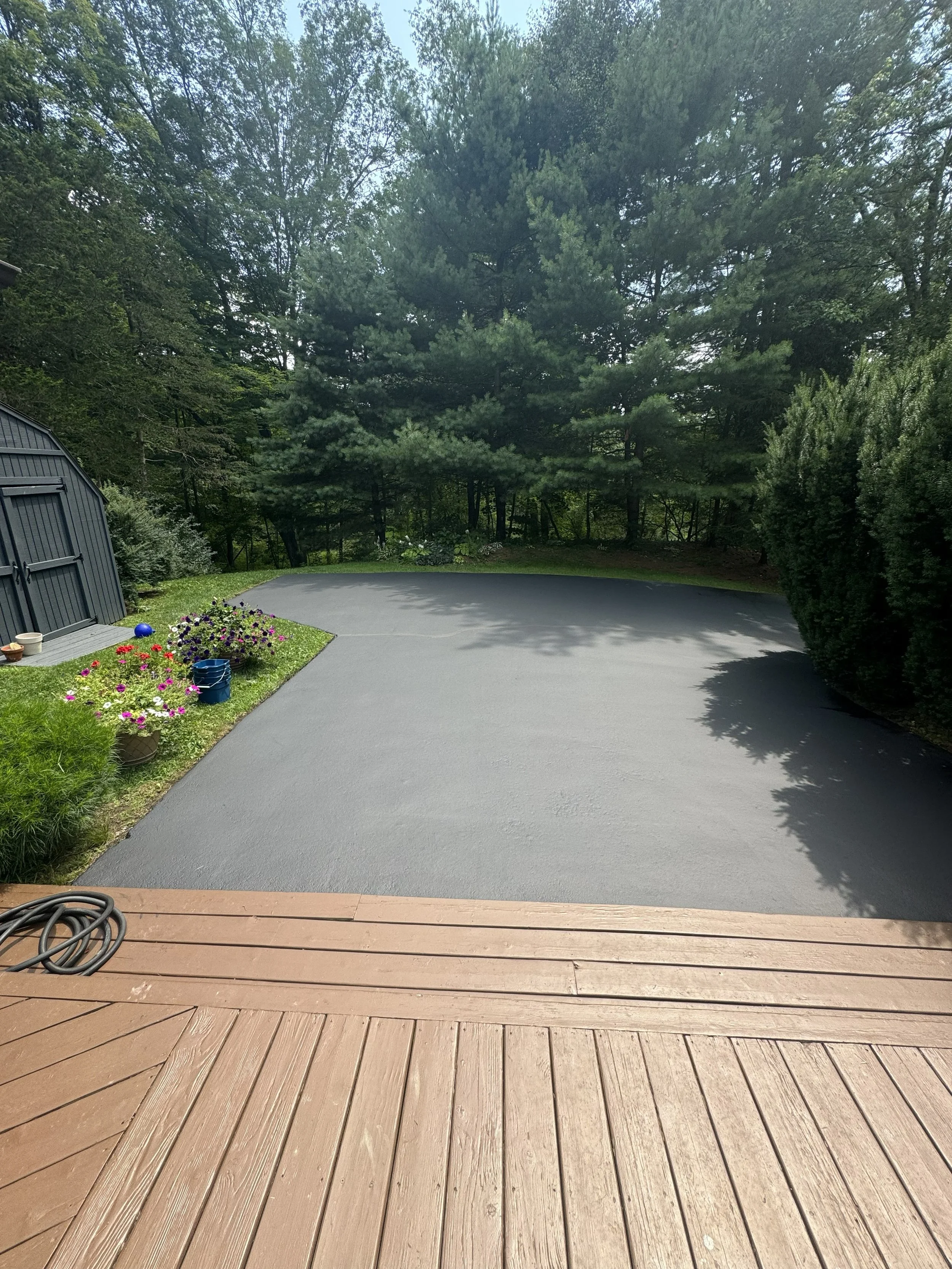
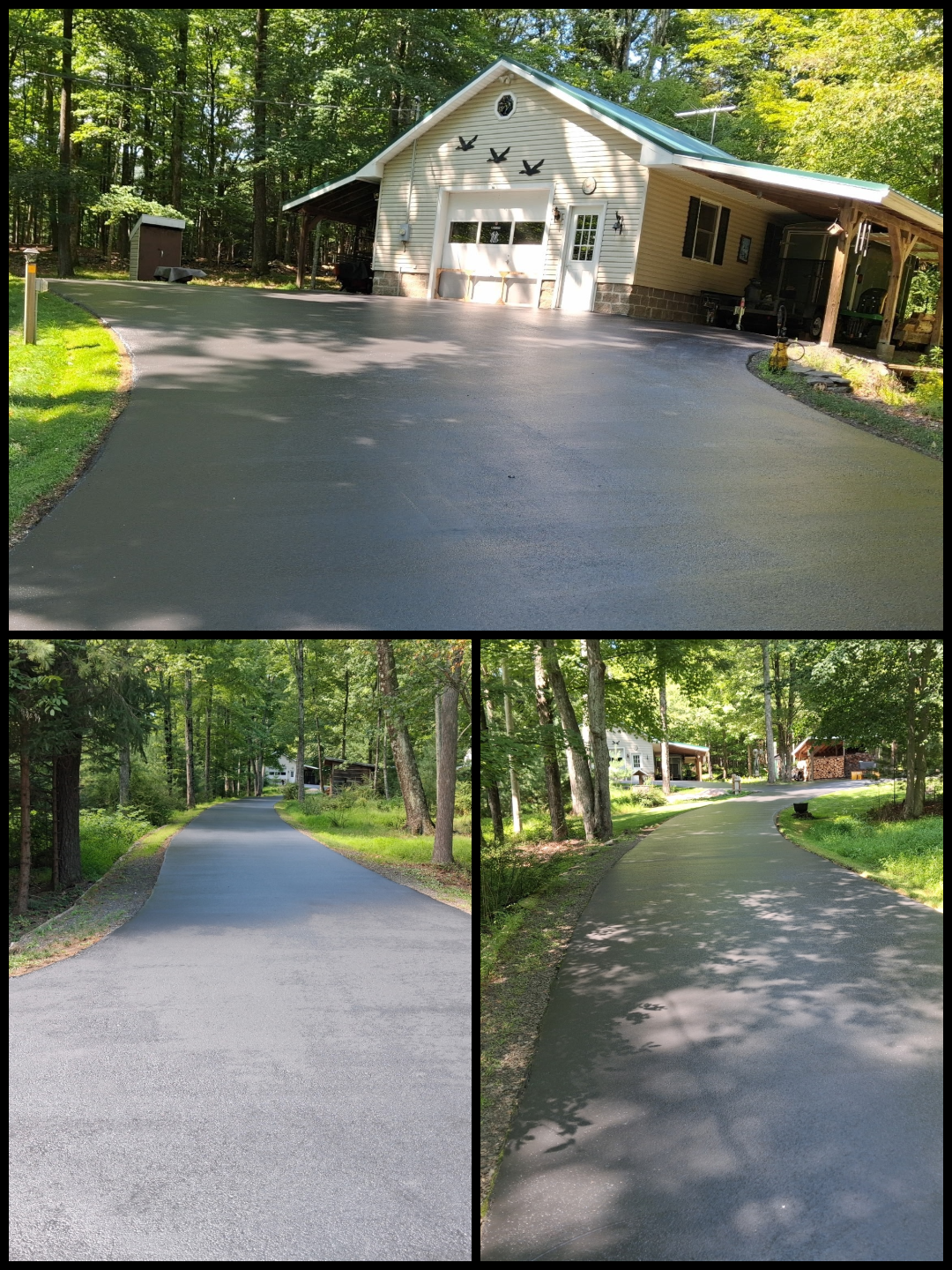
Sealcoating
Sealcoating does more than make a driveway look good. Properly applied, it helps protect asphalt from sun, water, weather, and everyday wear. But the finished result depends on more than the sealer itself—it starts with how the driveway is prepared.
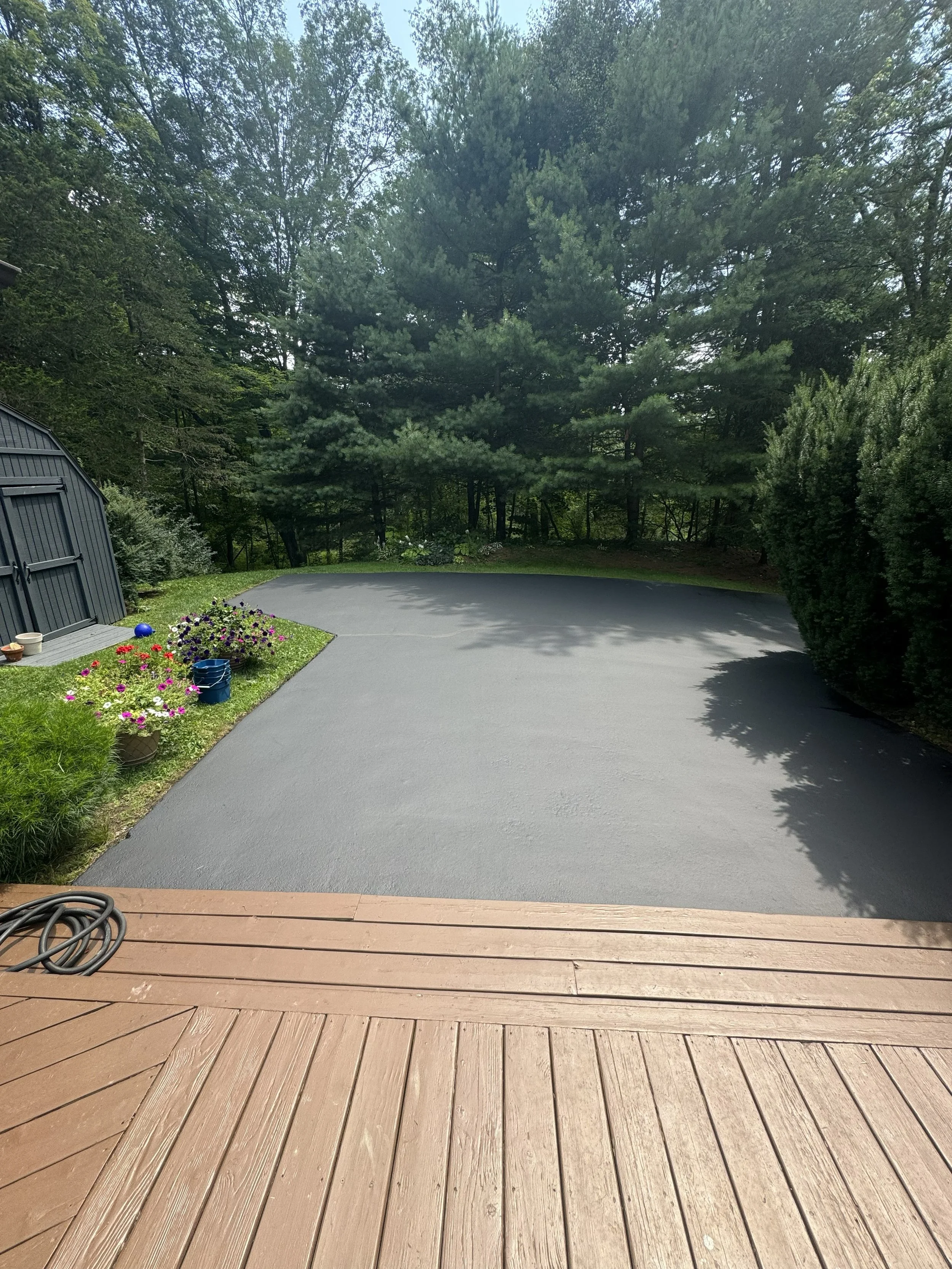
A good sealcoat starts with a clean surface.
Before any sealer goes down, we thoroughly clean the entire driveway. Dirt and loose material are removed using steel-bristle brooms, hand tools, and power equipment where needed. Areas with heavy buildup or moss get extra attention.
Grass and weeds growing through cracks or along the pavement are removed, and oil or other stains are treated before application.
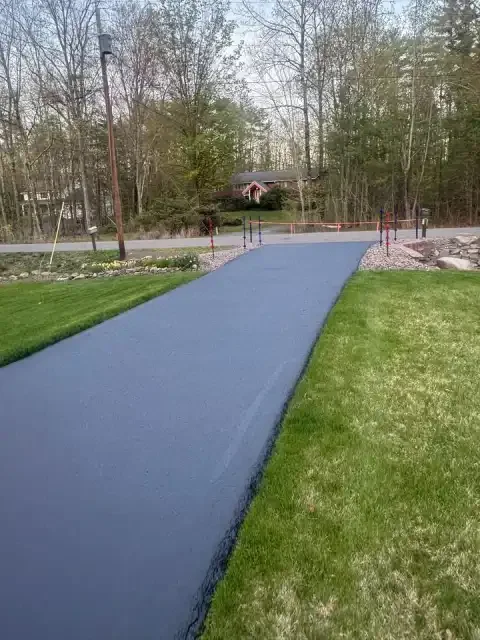
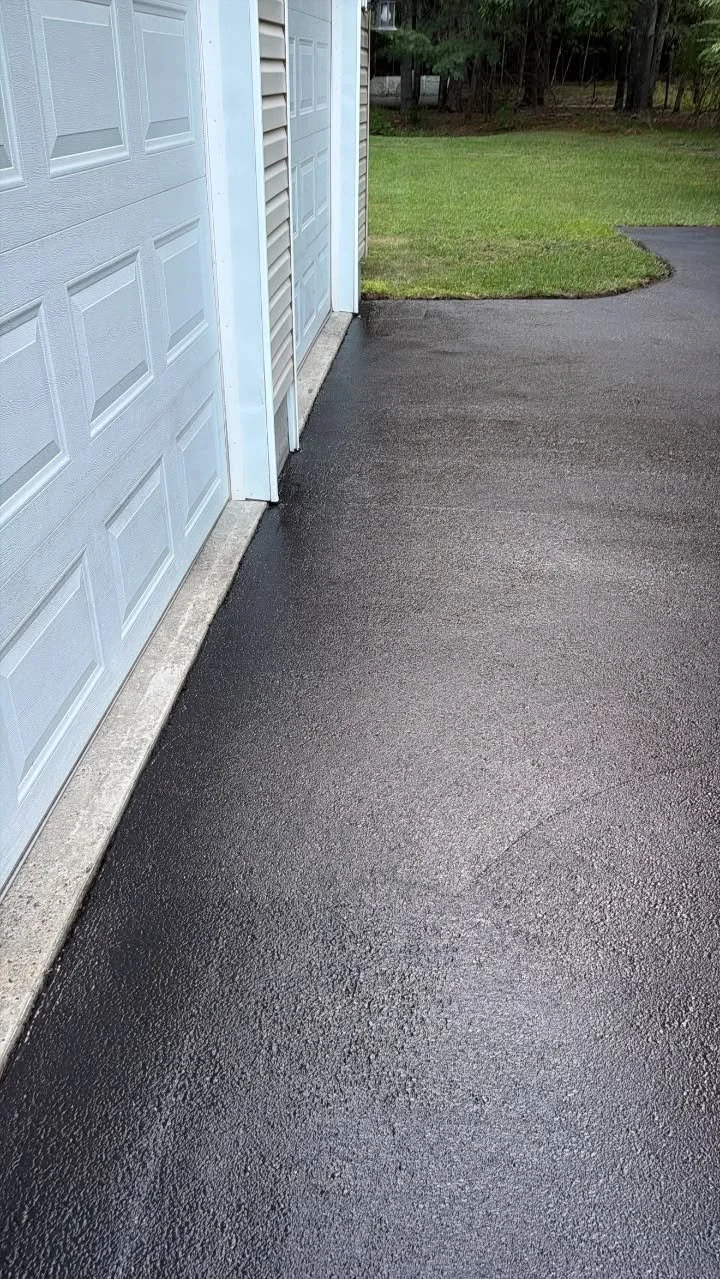
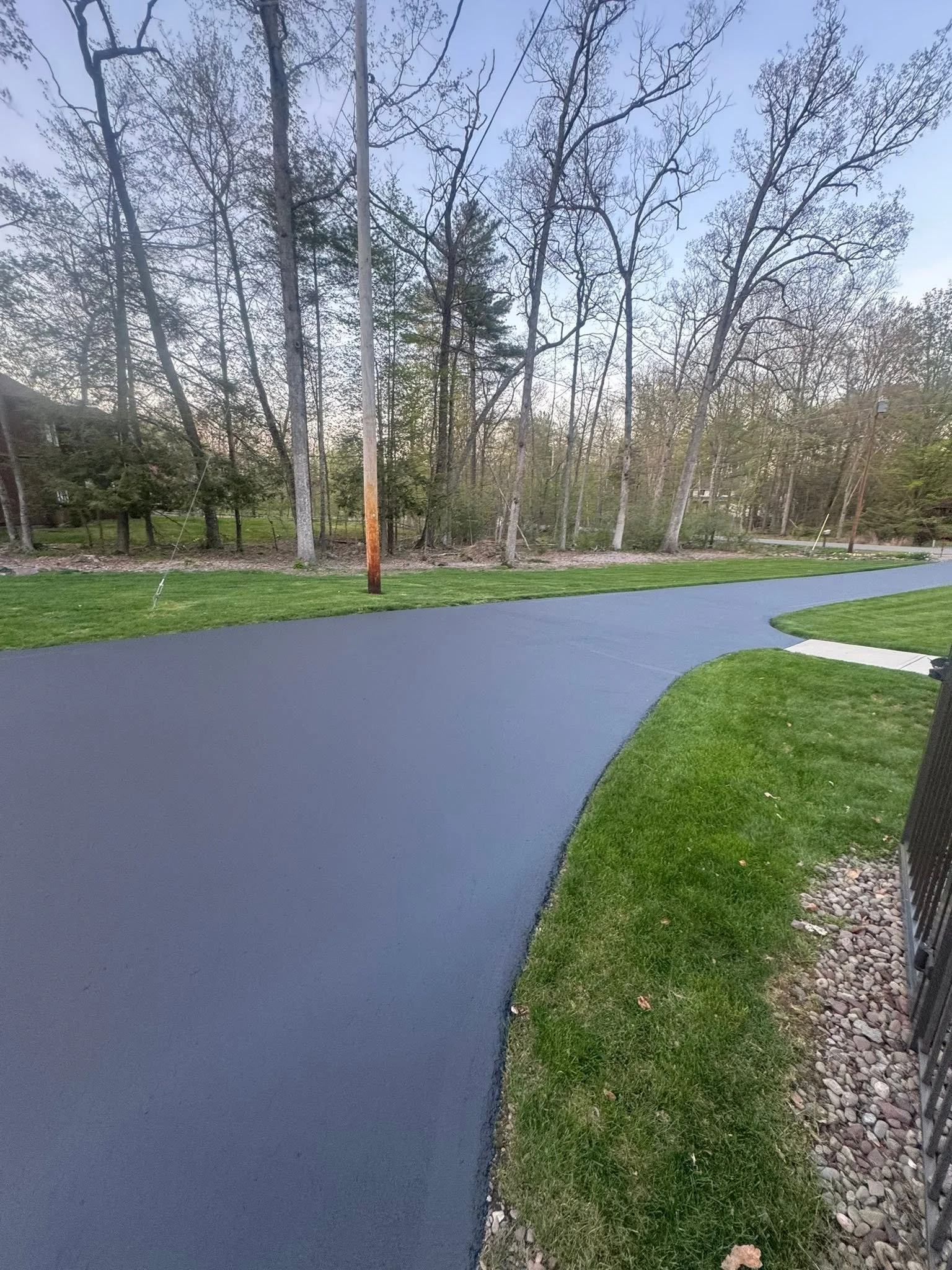
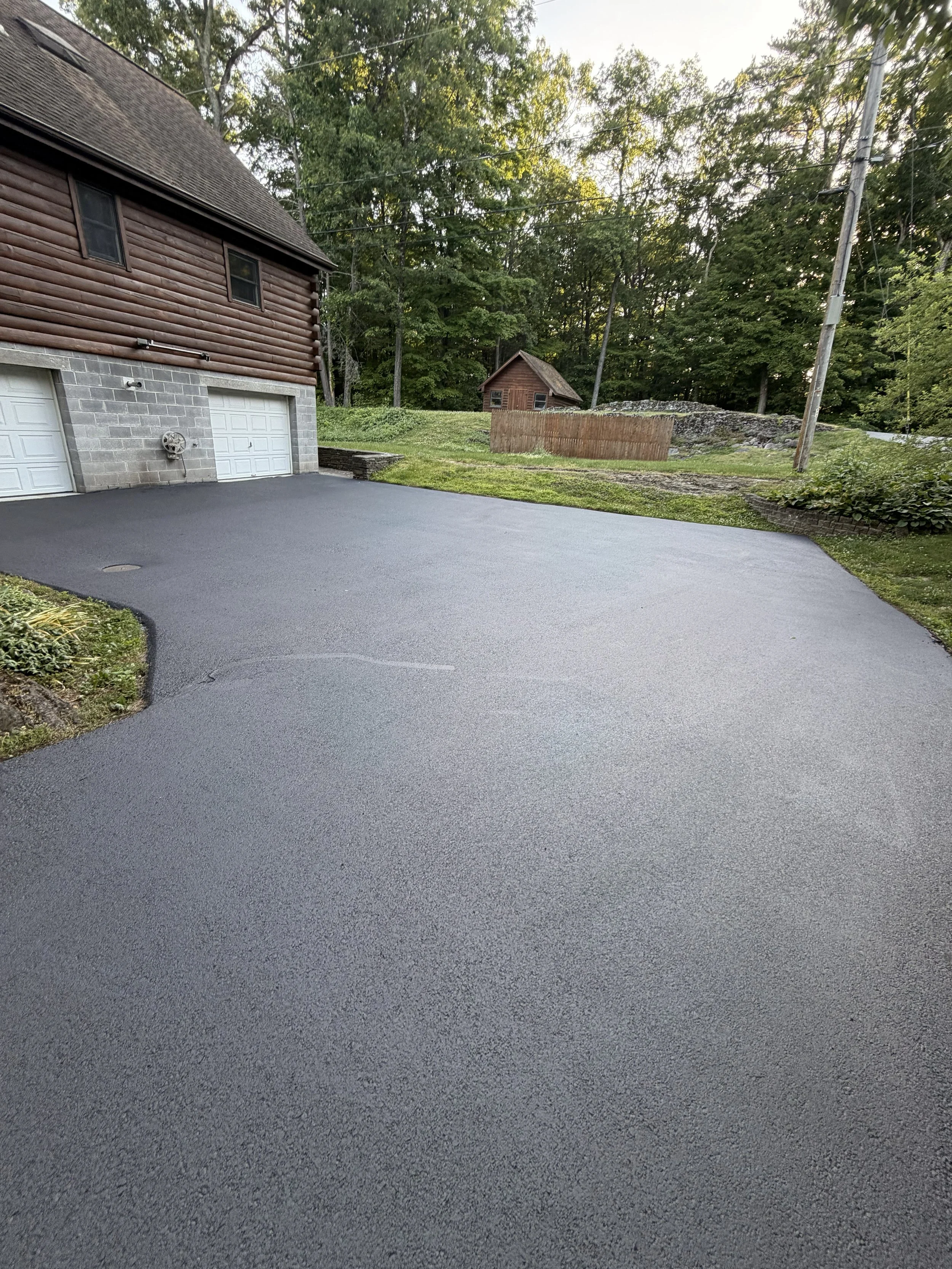
We also carefully clean and prepare the edges around garages, walkways, landscaping, and other adjoining surfaces so the finished job has clean, crisp lines.
The Difference Is in the Prep
We apply sealer using buckets, brooms, and multiple types of squeegees, working the material across the surface for consistent coverage and a smooth, durable finish.
Areas around garages, walkways, landscaping, and other adjoining surfaces are carefully finished by hand with brushes. That extra attention gives the driveway clean, crisp edges without leaving sealer where it doesn’t belong.
We use a high-quality sealer and apply it at the proper consistency — not watered down to stretch the material farther.
Applied by Hand. Finished with Care.
Once the sealcoat is applied, it needs time to properly cure. We typically recommend keeping vehicles off the driveway for 24–48 hours, depending on weather and conditions.
We’ll let you know when it’s safe to drive on based on the conditions at the time of application.
Give It Time to Cure
We Don’t Seal Just Because You’re on the Schedule.
Sealcoat needs the right conditions to cure properly. If rain is expected or temperatures aren’t suitable for application, we wait.
That may mean rescheduling a job, but we’d rather do that than apply sealer in conditions that can compromise the finished result.
If the conditions aren’t right, we don’t put it down.
Asphalt naturally dries and oxidizes as it ages. Sun, water, weather, vehicle fluids, and everyday use all contribute to that wear over time.
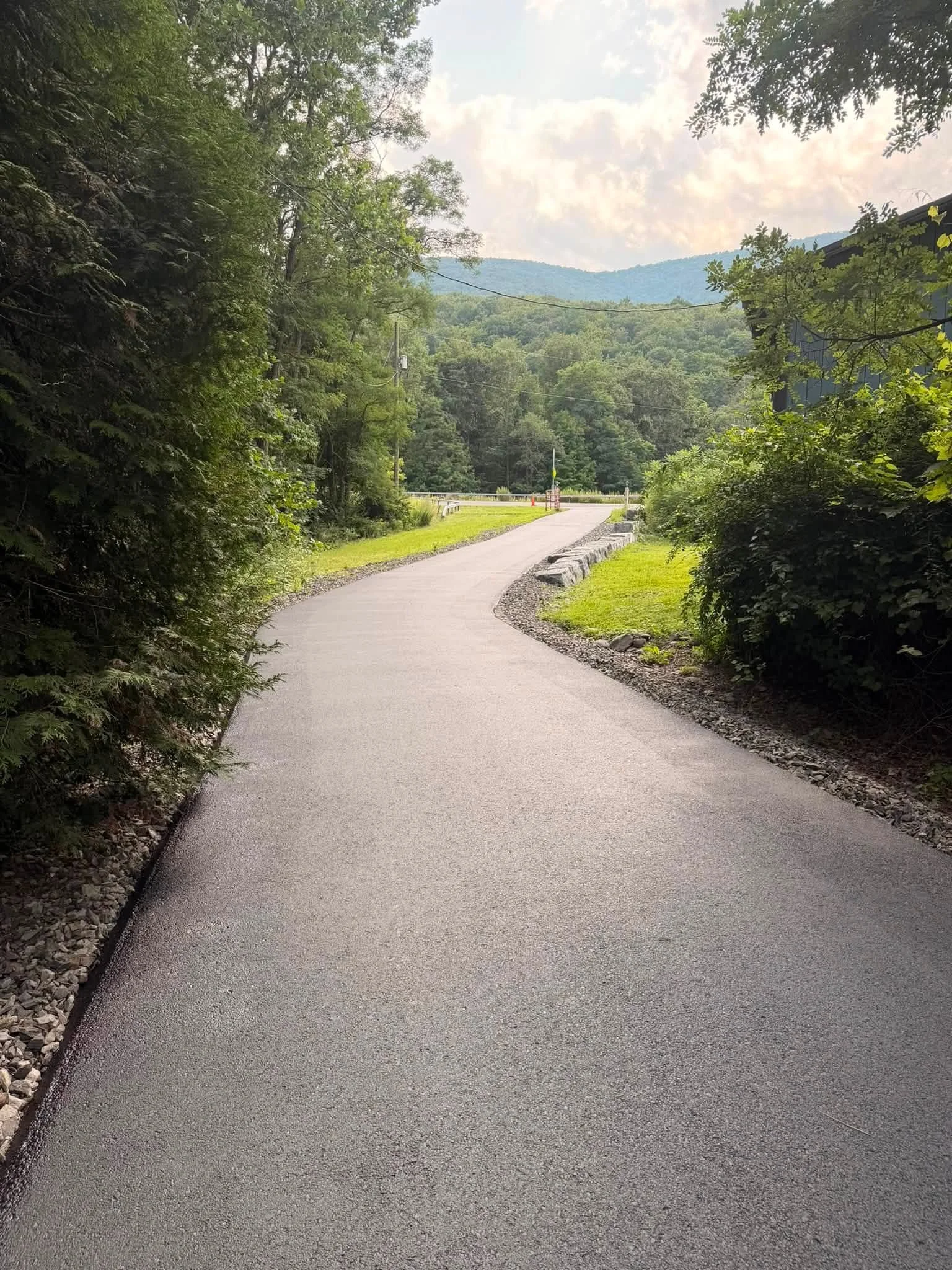
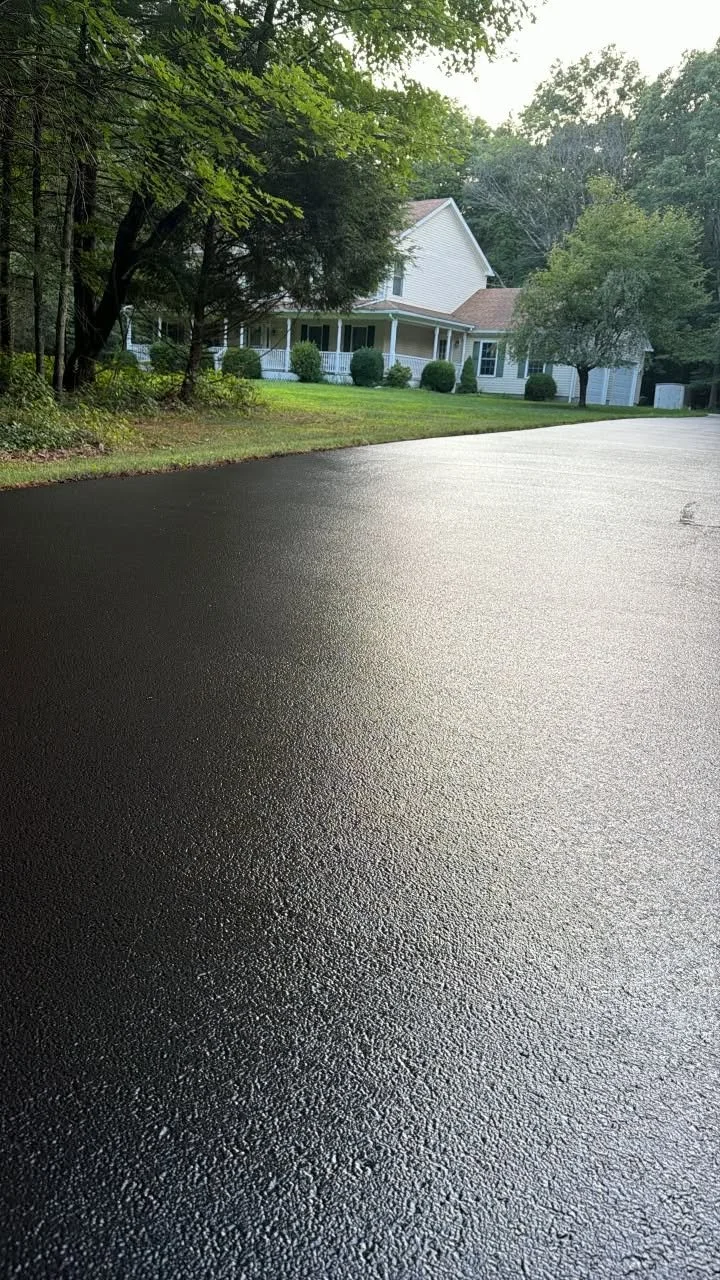
Sealcoating creates a protective layer over the surface, helping slow that deterioration, reduce water penetration, and protect the asphalt from the elements- while restoring the clean, dark finish of a well-maintained driveway.
Sealcoating can’t undo existing damage, but when the asphalt is still in serviceable condition, it can help protect vulnerable areas and slow further deterioration.
“If we can’t save it, we can pave it.”
We’ll look at the condition of your asphalt and recommend what makes sense for the property.
Why Sealcoat?
A brand-new asphalt driveway shouldn’t be sealed right away. New asphalt needs time to cure and weather before sealcoat is applied.
For driveways we pave during the season, we typically recommend following up with us the following spring to discuss the first sealcoat. If your driveway was paved elsewhere and you’re unsure whether it’s ready, we’re happy to take a look.
New Asphalt? Give It Time
Ready to Protect Your Driveway?
We’ll take a look at the condition of your asphalt and recommend what makes sense for your property.